Transforming Logistics with AI: A Practical Approach

Updated: Sep 12
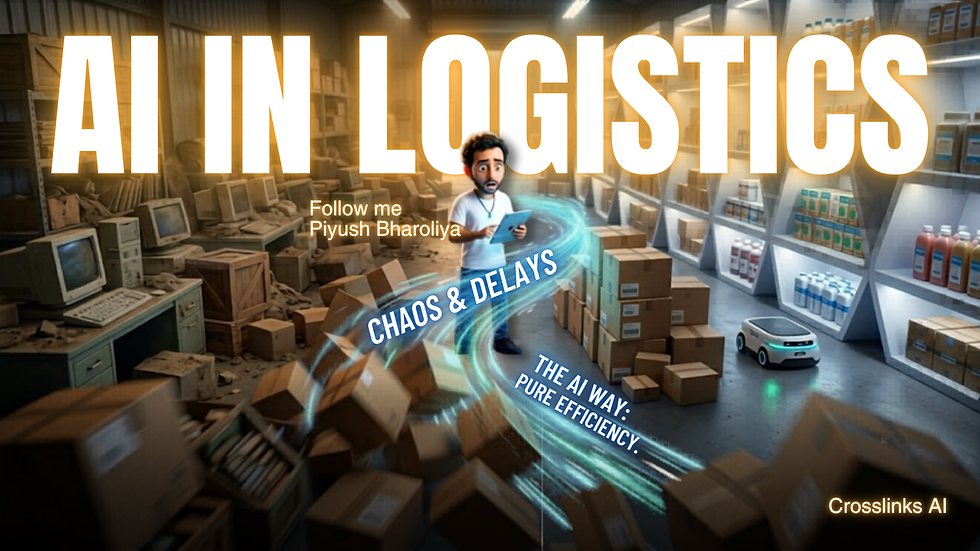
Understanding the Chaos in Logistics
The most dangerous thing about logistics chaos is how normal it looks. A delayed shipment gets resolved. A mislabelled order gets corrected. An angry customer gets a discount. Life moves on.
But each of those moments has a cost. Time spent firefighting is time not spent growing. Errors that get fixed manually still cost money, trust, and energy. A team that spends its day managing chaos has nothing left for the work that actually moves the business forward.
Chaos that gets resolved is still chaos. Fixing a problem repeatedly is not the same as solving it.
The Role of AI in Logistics
Where AI in Logistics Makes the Biggest Difference
Shipment Visibility: AI tracks every order in real time and flags issues before they become delays. Your team stops chasing updates and starts managing exceptions.
Inventory Management: Automated stock tracking eliminates manual counts and reduces the mismatch between what the system says and what is actually on the shelf.
Customer Communication: AI-generated updates keep buyers informed automatically. Fewer calls, fewer complaints, and fewer hours spent explaining what went wrong.
Operations Reporting: Data that used to take hours to compile is ready in seconds. Decisions get made on current information, not yesterday's spreadsheet.
The First Step Towards Integration
You do not need to overhaul everything at once.
The businesses that integrate AI successfully start with one question:
Where is the most time being lost right now?
That single answer tells you exactly where to begin. AI in logistics can streamline processes, reduce errors, and ultimately save time and money.
Practical Steps to Implement AI
Assess Your Current Systems:
Start by evaluating your existing logistics processes. Identify bottlenecks and areas where delays frequently occur. This assessment will help you pinpoint where AI can have the most impact.
Choose the Right AI Tools:
Not all AI solutions are created equal. Research and select tools that align with your specific needs. Look for platforms that offer real-time tracking, automated reporting, and seamless integration with your current systems.
Train Your Team:
Implementing AI is not just about technology; it’s also about people. Ensure your team understands how to use the new tools effectively. Provide training sessions and resources to help them adapt to the changes.
Monitor and Adjust:
After implementation, continuously monitor the performance of your AI systems. Gather feedback from your team and make adjustments as necessary. This iterative approach will help you refine your processes over time.
The Future of Logistics with AI
As AI continues to evolve, its applications in logistics will expand. From predictive analytics to advanced robotics, the future holds exciting possibilities. Embracing these changes will not only enhance efficiency but also improve customer satisfaction.
Conclusion
In conclusion, logistics chaos is not an inevitable part of doing business. By integrating AI into your operations, you can transform how your team works. Start small, focus on the areas where time is lost, and gradually build a more efficient system.
Learned something new?
♻️ Share it with your network.
We work with businesses to identify where their operations are losing time and how AI can fix it.



Comments